
A repair or extension can stand out for all the wrong reasons. Fresh, bright bricks next to weathered old ones look obvious and cheap. Learning how to match new bricks with existing brickwork keeps the work discreet. The goal is a repair that blends in as if it was always there. Gora Bricklayers is known for brickwork repair and restoration with careful brick matching across Birmingham. This guide covers colour, texture, size, and mortar. A good match protects both the look and the value of a home.
Why Does Matching New Bricks to Old Matter So Much?
A mismatched repair draws the eye instantly. Bright new bricks against aged ones look like a patch. The whole wall then appears untidy.
A close match protects the property’s value. Buyers and neighbours notice a poor repair. A blended repair keeps the home looking cared for.
Conservation areas often demand a close match. Planning conditions can require matching materials. Getting it right avoids problems later.
What Makes One Brick Look Different from Another?
Three things define a brick’s appearance. Colour, texture, and size all vary widely. A good match considers each of them.
The UK has over 4,000 brick types in production. They come from many clays and firing methods. That variety both helps and complicates the search.
Even the same brick weathers over time. Age changes the colour and the surface. The target is the wall as it looks now.
How Do Manufacturing and Weathering Change a Brick’s Look?
Old bricks were often made by hand or in small batches. They vary in size, shape, and colour. Modern bricks are far more uniform.
Weathering adds another layer of change. Decades of rain, sun, and pollution shift the colour. Moss and staining deepen the aged look.
Matching period brickwork on older homes means copying both the brick and its ageing. A brand-new brick rarely matches straight away. The weathered finish has to be recreated.
Which Features Need Matching First?
Colour is the feature people notice first. A close colour match does most of the work. It is the top priority.
Texture and size come next. A smooth brick beside a rough one still jars. The dimensions must line up with the existing courses.
The bond pattern matters too. The way the bricks are laid has to continue. All four features together create a true match.
How Is Brick Colour Matched to Existing Brickwork?
Colour matching starts with a clean sample. A brick from a hidden spot shows the true shade. Photographs in different light help the search.
Most walls use a blend, not one flat colour. Gora Bricklayers blends several shades to copy that variation. A single uniform brick often looks wrong.
Colour also shifts with the light and the weather. A match is checked in both dry and wet conditions. The aim is a blend that reads as one wall.
Why Does Texture Matter as Much as Colour?
Texture is the surface feel of the brick. Old bricks are often rough, pitted, or handmade. A smooth new brick stands out even in the right colour.
The finish must copy the original surface. Sand-faced, tumbled, and handmade textures all differ. The closest texture makes the repair disappear.
Light plays off texture as much as colour. A matching surface catches shadows the same way. That consistency ties the wall together.
How Are Brick Size and Bond Pattern Matched?
Brick sizes have changed over the years. Older bricks are often shorter or thinner. A size mismatch throws off every course.
The new bricks have to align with the existing joints. Coursing that does not line up looks wrong at once. Special sizes are sometimes made to fit.
The bond pattern has to continue without a break. Stretcher, Flemish, and English bonds all differ. The repair follows the same layout.
Should Reclaimed or New Bricks Be Used for a Match?
Reclaimed bricks can match an old wall closely. They already carry the right age and wear. They suit heritage work and historic brickwork restoration well.
Reclaimed bricks carry a warning, though. Their strength and durability are rarely guaranteed. Poor reclaimed bricks can fail in exposed spots.
New bricks are often the safer choice. Specialist makers produce close matches to order. A skilled eye decides which route fits the job.
The surest way to get a brick match right is a sample checked against the wall. Call 07574 580332 for a free assessment and honest advice. Reach the team through the Contact Page for a no-obligation quote.
Why Does the Mortar Need Matching, Not Just the Brick?
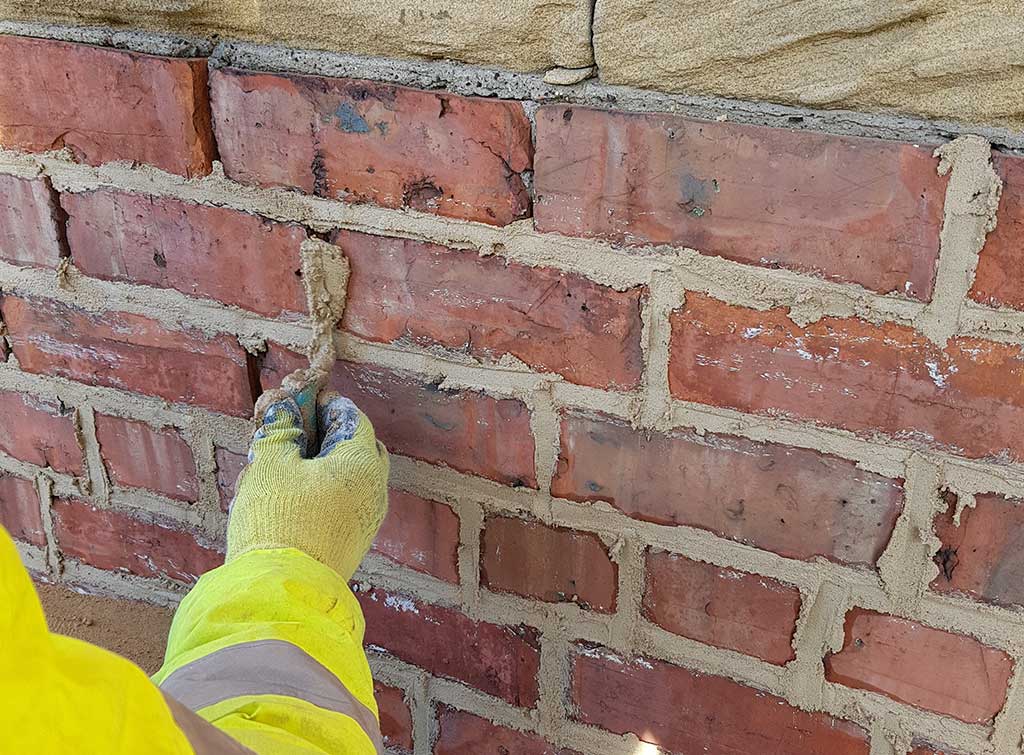
Mortar makes up a large share of a wall’s surface. The wrong mortar ruins even a perfect brick match. Colour and joint style both matter.
Old walls often used soft lime mortar repairs rather than cement. A hard cement joint looks and behaves differently. The mix should suit the original wall.
The joint finish has to copy the original too. Flush, recessed, and weathered joints all read differently. Matching the mortar completes the repair.
What Is Brick Tinting, and When Does It Help?
Sometimes the closest available brick still differs in colour. Brick tinting solves that gap. A dye is painted onto the new brick face.
The dye soaks into the clay and bonds permanently. It then weathers at the same rate as the original. The result blends the new brick into the old.
Tinting is a specialist, on-site process. It fine-tunes a near match rather than replacing selection. Skilled application looks completely natural.
How Do Professionals Test a Brick Match Before Building?
A good match is proven before the full order. A small sample panel is built against the existing wall. It shows how the bricks read together.
Gora Bricklayers checks the panel in different light and weather. Adjustments to the brick or mortar happen at this stage. Only a confirmed match then goes ahead.
This step prevents an expensive mistake. A wrong match across a whole wall is costly to redo. The panel is cheap insurance.
How Much Does Brick Matching Add to a Project?
Matching adds some cost but protects the result. Sourcing the right brick takes time and skill. The 2026 ranges below give a guide.
| Matching Option | Typical 2026 Cost (UK) | Notes |
|---|---|---|
| Standard matching new brick | £400 – £1,200 per 1,000 | Depends on type and rarity |
| Reclaimed bricks | £600 – £1,500 per 1,000 | Vary by age and demand |
| Brick tinting | Priced per brick or area | Blends a near match |
| Sample panel test | Small labour extra | Prevents costly errors |
Reclaimed and specialist bricks cost more than standard ones. Tinting and sample panels add a little too. For related figures, see typical brick restoration costs.
Where Does Brick Matching Matter Most?
Matching matters most where new meets old. Extensions are the classic example. A home extension guide shows how the join defines the look.
Repairs after damage also need a close match. A patched wall should not advertise the repair. Chimneys and boundary walls are common cases.
Front elevations demand the closest match of all. The street sees them every day. Hidden areas allow a little more tolerance.
Why Is Brick Matching Best Left to a Professional?
Brick matching blends craft with experience. A trained eye spots the right colour, texture, and size. Guesswork usually produces an obvious patch.
A professional also understands the mortar and the bond. Industry bodies such as the Brick Development Association brickwork guidance support this careful approach. The right knowledge protects the finish.
Sourcing the correct brick takes contacts and time. A specialist bricklayer finds the closest match faster. The result looks like part of the original wall.
Getting a Lasting Brick Match in Birmingham
Matching new bricks with existing brickwork comes down to detail. Colour, texture, size, bond, and mortar all have to align. A tested sample proves the match before the work.
Gora Bricklayers matches brick and mortar for repairs and extensions across Birmingham and the West Midlands. Catching problems early, such as failing mortar warning signs, keeps repairs small and easy to match. A careful match protects the look and value for years.
Gora Bricklayers handles brick matching, repairs, extensions, and restoration across Birmingham and the wider West Midlands. Call 07574 580332 or use the contact page for a free assessment and quote. The team is fully insured and gives honest, transparent pricing with no pressure.
Frequently Asked Questions
1. How do you match new bricks to old brickwork?
Matching new bricks to old brickwork means copying four things: colour, texture, size, and the bond pattern, and then matching the mortar as well. The process starts by studying the existing wall closely, ideally taking a clean sample brick from a hidden spot and photographing the wall in different light and weather. Colour is the feature people notice first, but most old walls are a blend of several shades rather than one flat colour, so the new bricks are usually blended too. Texture matters just as much, since a smooth new brick beside a rough, weathered one still looks wrong even in the right colour. Brick size has changed over the years, so the new bricks must line up with the existing courses and joints. With over 4,000 brick types made in the UK, a close match can often be found, and specialist makers produce bricks to order for tricky cases. The safest approach is to build a small sample panel against the existing wall and check it before ordering in full. Where a slight colour gap remains, brick tinting can blend it.
2. Can new bricks ever perfectly match old weathered bricks?
New bricks can get very close to old weathered bricks, but an instant, perfect match straight from the pallet is rare. The reason is weathering. Decades of rain, sun, pollution, moss, and staining change the colour and surface of the original brickwork, and a freshly made brick has not been through any of that. The clay colour, texture, and size can be matched well, especially with the huge range of bricks and specialist makers available in the UK, but the aged patina takes longer to appear. There are a few ways to bridge the gap. Blending several shades of new brick copies the natural variation of an old wall. Placing new bricks in less visible areas, and spreading them through the repair rather than in one block, reduces any contrast. Brick tinting is the most effective fix for a colour difference, as a dye is painted into the new brick face and then weathers at the same rate as the original. Over a few years, a well-chosen new brick will also weather naturally and blend in even more closely.
3. Are reclaimed bricks better than new bricks for matching?
Reclaimed bricks are not automatically better for matching, though they can be an excellent choice in the right situation. Their big advantage is that they already carry the age, colour, and wear of old brickwork, so they can blend into a period wall very convincingly. That makes them popular for heritage work and conservation projects. However, reclaimed bricks come with an important caution. Their strength and durability are rarely guaranteed, because it is often unknown where they were originally used or how weathered they already are. A reclaimed brick that was fine on a sheltered internal wall may fail if placed somewhere exposed to driving rain and frost. For this reason, reclaimed bricks should be used with care, and it helps to know their original source. New bricks are frequently the safer option, as their quality and durability are known, and specialist manufacturers can produce very close matches to order. In many cases a blend of tactics works best. The right choice depends on the wall, its exposure, and how important an exact aged look is.
4. What is brick tinting and does it really work?
Brick tinting is a specialist process that changes the colour of a brick by applying a dye directly to its face, usually on site. It is used when the closest available brick is a good match for texture and size but slightly off in colour. Unlike paint, which sits on the surface and can flake, a proper brick tint penetrates into the clay and forms a permanent bond. Crucially, it then weathers at the same rate as the surrounding original bricks, so the repair stays blended over time rather than standing out again after a few years. Done well, tinting looks completely natural and is very hard to detect. It works best as a fine-tuning step on a near match, not as a way to disguise a badly chosen brick. Because it is a skilled, on-site craft, the results depend heavily on the applicator’s experience with colour and blending. When carried out by a specialist, brick tinting is an effective and long-lasting solution for blending new brickwork into an older wall, and it is often cheaper than sourcing rare matching bricks.
5. Why does the mortar matter when matching brickwork?
Mortar matters enormously when matching brickwork because the joints make up a large part of what the eye sees on a wall. A perfect brick match can still look wrong if the mortar colour, joint width, or finish is different from the original. There are two sides to it. The first is appearance: the mortar colour and the joint style, whether flush, recessed, or weathered, need to copy the existing wall so the pattern reads as one surface. The second is technical suitability. Many older Birmingham homes were built with soft lime mortar rather than modern cement. Using a hard cement mortar on a wall designed for lime can trap moisture and force it out through the brick faces, which damages the bricks over time. So the mortar should match both the look and the behaviour of the original. Getting the mix, colour, and joint finish right is what completes a repair and makes it disappear. This is one reason brick matching is best handled by an experienced bricklayer who understands both the bricks and the mortar.
6. Do I need matching bricks for an extension in a conservation area?
In a conservation area, matching bricks are usually expected and are often a formal requirement rather than just a preference. Conservation areas exist to protect the character and appearance of an area, so planning authorities frequently attach conditions requiring that new work matches the existing materials, including the brick colour, texture, size, and the mortar. This applies strongly to extensions and to any work visible from the street. Failing to match materials can lead to a refusal of planning permission, or to enforcement action if the work goes ahead without approval. Even outside formal conservation areas, matching materials on an extension protects the look and value of the home. The best approach is to check with the local planning authority early, before ordering any bricks, to confirm exactly what is required. It is also wise to build a sample panel and, where needed, agree the brick choice with the planners. An experienced local bricklayer who knows Birmingham’s housing stock and planning expectations can source the right brick and mortar and help the work meet the conditions smoothly.


