
Building a garden wall in Birmingham is one of the most practical improvements a homeowner can make. It adds privacy, security, and value to any property. But the cost varies significantly depending on wall size, brick type, ground conditions, and who builds it.
Gora Bricklayers has been building garden walls as garden wall builders in Birmingham across the city and the West Midlands for years.
This guide gives Birmingham homeowners real 2026 pricing, explains what drives the cost up or down, and covers everything from foundations to planning permission.
How Much Does a Garden Wall Cost in Birmingham in 2026
The short answer: a standard garden brick wall in Birmingham costs between £130 and £250 per square metre in 2026, including materials and labour. That figure covers machine-made bricks, standard mortar, and foundations on normal ground conditions.
Here is what that looks like for common wall sizes:
| Wall Size | Thickness | Estimated Cost Birmingham 2026 |
|---|---|---|
| 5m x 1.2m | Half brick (single skin) | £850 to £1,200 |
| 5m x 1.2m | Full brick (double skin) | £1,200 to £1,800 |
| 10m x 1.2m | Half brick | £1,200 to £1,800 |
| 10m x 1.2m | Full brick | £1,800 to £2,500 |
| 5m x 2m | Full brick | £1,500 to £2,200 |
| 10m x 2m | Full brick | £2,500 to £3,500 |
These figures include labour, materials, basic foundations, and capping. They exclude VAT, deeper clay soil foundations, and any groundwork complications like tree roots or difficult access. Foundation costs on Birmingham clay can add £40 to £150 per linear metre depending on depth required.
Birmingham pricing sits below London and the South East by roughly 10 to 15 percent. Material and labour costs across the West Midlands have risen 5 to 8 percent since 2025, with brick prices seeing the sharpest increase.
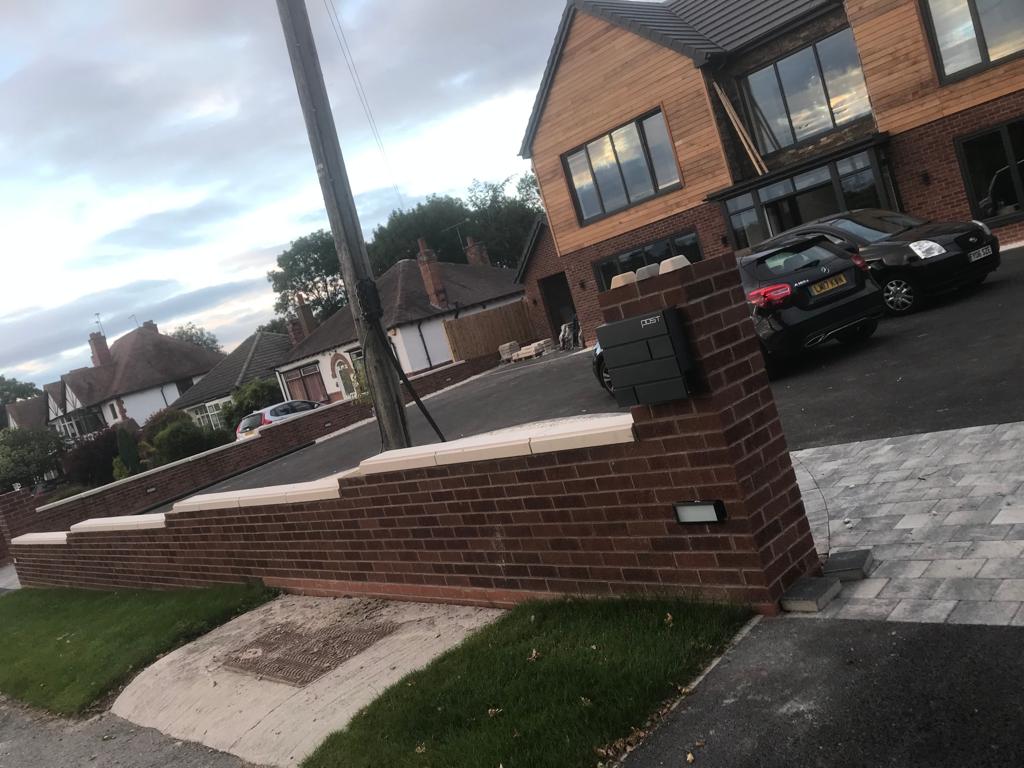
What Affects the Price of a Garden Wall in Birmingham
Six factors determine the final cost. Understanding these before requesting quotes helps homeowners compare like for like.
Wall Size and Height
Every additional metre of length or height adds bricks, mortar, and labour time. A 2m high wall requires a thicker base, deeper foundations, and more courses than a 1.2m boundary wall. Height is the biggest single cost driver after length.
Wall Thickness
A half-brick wall uses one skin of bricks. A full-brick wall uses two skins bonded together. The full-brick wall costs roughly twice as much in materials and takes longer to build. Walls over 1.2m high should be full-brick thickness for structural stability.
Brick Type
Machine-made facing bricks are the most affordable option at £700 to £1,200 per thousand in 2026. Handmade bricks cost £1,000 to £2,000 per thousand. Reclaimed bricks sit between £800 and £2,000 per thousand depending on availability and condition. Choosing reclaimed bricks to match an existing Victorian property increases material cost significantly.
Ground Conditions
Birmingham’s clay soil is the single most common reason garden wall costs exceed initial estimates. Clay requires deeper foundations than sandy or chalk ground. More on this in the dedicated section below.
Site Access
Bricks are heavy. If the wall location is accessed through a narrow side alley, a rear garden with no vehicle access, or across an existing patio, the cost of getting materials to the build site increases. Difficult access adds labour time and sometimes requires barrow runs rather than machine delivery.
Location Within Birmingham
Areas with conservation restrictions, such as parts of Edgbaston, Moseley, and Harborne, may require specific brick types or mortar specifications to match the existing streetscape. This adds to material cost and sometimes requires a planning application.
Cost Breakdown: Materials, Labour, and Foundations
Brick Costs
| Brick Type | Cost Per Brick | Cost Per 1,000 | Cost Per sqm |
|---|---|---|---|
| Machine-made facing | 70p to £1.20 | £700 to £1,200 | £45 to £80 |
| Handmade | £1.00 to £2.00 | £1,000 to £2,000 | £60 to £120 |
| Reclaimed | £1.00 to £3.00 | £800 to £2,000 | £50 to £120 |
Other Materials
| Material | Estimated Cost (5m x 1.2m double-skin wall) |
|---|---|
| Sand | £120 to £140 |
| Cement | £90 to £110 |
| Plasticiser | £5 to £10 |
| Capping stones or coping bricks | £50 to £75 |
| Foundation concrete (standard depth) | £100 to £150 |
| Foundation concrete (clay soil, deeper) | £200 to £400 |
Labour Costs in Birmingham
| Worker | Daily Rate Birmingham 2026 |
|---|---|
| Experienced bricklayer | £220 to £300 |
| Labourer | £80 to £120 |
| Two-person bricklaying team | £500 to £600 |
A standard 5m x 1.2m double-skin garden wall takes approximately 3 days with a two-person bricklaying team and a labourer. Labour for that job typically runs between £1,500 and £2,100. Larger or more complex walls take proportionally longer.
Types of Garden Wall and What Each Costs
Boundary Wall
The most common garden wall in Birmingham. Typically 1.2m to 1.8m high, full-brick thickness, with capping. Provides privacy, security, and a clean boundary line. Cost for a 10m boundary wall runs £1,800 to £3,500 depending on height, thickness, and brick type.
Retaining Wall
Built to hold back earth on a sloped garden. Retaining walls require engineering-grade bricks, reinforced foundations, and drainage behind the wall. They cost significantly more than a standard boundary wall of the same size. Gora Bricklayers assesses the ground conditions and slope before quoting retaining wall work.
Decorative Garden Wall
A lower wall, typically 600mm to 900mm, used to create raised beds, define garden sections, or frame a patio. Often combined with driveway landscape and garden wall work as part of a larger outdoor project. Lower material and labour costs but often uses premium bricks for appearance.
Garden Wall as Part of a Home Extension
When a garden wall is built alongside a home extension, the cost per metre often drops because the bricklayer is already on site, materials are ordered in bulk, and foundations for both structures can be dug at the same time. Combining projects saves on mobilisation and delivery costs.
Birmingham Clay Soil and What It Means for Foundation Cost
Much of Birmingham sits on heavy clay soil. Clay shrinks in dry weather and swells when wet. This ground movement can crack foundations and destabilise garden walls if the foundations are not deep enough.
On sandy or chalk ground, garden wall foundations are typically dug to 450mm to 600mm. On Birmingham clay, the minimum depth increases to 750mm and frequently reaches 1.0m to 1.5m depending on the specific site conditions. Properties near large trees on clay soil need even deeper foundations to get below the root zone.
The additional excavation, concrete, and labour for deeper foundations can add £500 to £1,500 to the total cost of a garden wall on clay ground, depending on wall length and required depth. This is the most common reason Birmingham garden wall quotes exceed national average figures.
Areas of Birmingham with particularly heavy clay include Acocks Green, Bordesley Green, Northfield, and parts of Harborne. Gora Bricklayers carries out a ground assessment on every garden wall project before confirming foundation depth and final pricing.
Planning Permission and Building Regulations in Birmingham
Most garden walls in Birmingham do not need planning permission. Under UK planning regulations, a garden wall can be built up to 2m high without a planning application, or up to 1m high if the wall is next to a highway or public footpath.
There are exceptions. Properties in conservation areas, including parts of Edgbaston, Moseley, and Harborne, may require approval for any new wall that changes the appearance of the property boundary. Listed buildings carry additional restrictions. It is always worth checking with Birmingham City Council before starting work in these areas.
Building Regulations do not typically apply to freestanding garden walls. However, the wall must still be structurally sound. Walls over 1.2m high should be built at full-brick thickness with appropriate piers at regular intervals for stability. Retaining walls that hold back significant earth loads may require Building Regulations approval and a structural engineer sign-off.
Brick Matching for Birmingham Properties
Getting the brick colour, texture, and mortar right matters more than most homeowners expect. A new garden wall built in the wrong brick next to a Victorian terrace or a 1930s semi looks obviously mismatched and can reduce rather than increase the property’s kerb appeal.
Birmingham’s housing stock spans several brick eras. Victorian terraces in Saltley, Bordesley Green, and parts of Harborne use softer, handmade bricks that require lime mortar. 1930s semis across Acocks Green, Northfield, and Stechford use harder machine-made bricks with cement mortar. Post-war properties use a mix of both.
Gora Bricklayers sources matching brick types from local suppliers and tests mortar mixes on site before the build starts. For stone work projects using natural stone rather than brick, the matching process involves selecting stone that complements the existing property facade in colour, texture, and coursing style.
Using the wrong mortar mix on an older Birmingham property is a common and costly mistake. Cement mortar on soft Victorian bricks creates a joint harder than the brick itself, which causes cracking and spalling over time. Mortar specification is matched to the brick hardness and the age of the property on every Gora Bricklayers job.
Want a Birmingham-specific quote for a garden wall? Gora Bricklayers provides free site visits and honest, fixed-price quotes across Birmingham and the West Midlands. Call +44 7574 580332 or contact us to discuss the project. No obligation. No hidden costs.
How Long Does It Take to Build a Garden Wall
Build time depends on wall size, ground conditions, and weather.
| Wall Size | Thickness | Estimated Build Time |
|---|---|---|
| 5m x 1.2m | Half brick | 1.5 to 2 days |
| 5m x 1.2m | Full brick | 2.5 to 3 days |
| 10m x 1.2m | Full brick | 3.5 to 4.5 days |
| 10m x 2m | Full brick | 5 to 6 days |
These timelines include foundation digging, concrete pouring and setting, bricklaying, and capping. Foundation concrete needs at least 24 hours to set before bricklaying begins. Mortar in the finished wall needs 28 days to reach full cure strength, though the wall is functionally complete much sooner.
Rain delays are the most common timeline disruptor on Birmingham garden wall projects. Brickwork should not be laid when temperatures drop below 3°C or during heavy rain. Spring and summer are the best seasons for garden wall builds in the West Midlands.
Garden Wall Maintenance and Repair Costs
A well-built garden wall requires minimal maintenance. Inspecting the mortar joints every two to three years and acting on early signs of deterioration prevents expensive repairs later.
Repointing
Mortar joints deteriorate over time from freeze-thaw cycling and moisture exposure. Crumbling or receding mortar needs raking out and replacing with fresh mortar matched to the original specification. For a full breakdown of what this involves and costs in Birmingham, the repointing cost Birmingham guide covers everything.
Capping Replacement
Capping bricks or coping stones protect the top of the wall from rain. Damaged or missing capping allows water to penetrate the wall core, accelerating deterioration. Replacing damaged capping costs £20 to £60 per linear metre depending on material and access.
Crack Repair
Hairline cracks in mortar joints are normal and can be repointed. Structural cracks that run through bricks rather than along mortar lines indicate foundation movement or overloading. These require professional assessment before repair.
How to Choose the Right Builder in Birmingham
Not every bricklayer builds garden walls to the same standard. These checks help Birmingham homeowners find the right team.
Ask to see completed garden walls in Birmingham, not just photos but ideally a visit to a recently finished site. Check that the builder carries public liability insurance with a minimum of £2 million cover. Confirm that the quote includes foundations, materials, labour, capping, and waste removal. Ask about mortar specification, especially if the wall is adjacent to older brickwork.
Avoid builders who quote without visiting the site. Ground conditions in Birmingham vary significantly from one street to the next, and a quote given without assessing the soil, access, and existing structures is unreliable.
Gora Bricklayers provides free site visits before quoting. The quote covers everything: foundation excavation, concrete, bricks, mortar, capping, labour, and site clearance. The price given before work starts is the price at the end.
Conclusion
A garden wall in Birmingham costs between £850 and £3,500 depending on size, brick type, ground conditions, and wall thickness. Clay soil across much of the city adds foundation cost that national averages do not account for. Brick matching for Victorian terraces and 1930s semis requires local knowledge of Birmingham’s housing stock that generic builders often lack.
Gora Bricklayers has built garden walls across every part of Birmingham. Every project starts with a free site visit, an honest assessment of ground conditions, and a fixed-price quote that covers the full scope of work.
Frequently Asked Questions
How much does it cost to build a 10-metre garden wall in Birmingham in 2026?
A 10-metre garden wall at 1.2m high in full-brick thickness costs between £1,800 and £2,500 in Birmingham in 2026, including materials, labour, foundations, and capping. That figure assumes standard machine-made bricks and normal ground conditions. On Birmingham clay soil, which is common across much of the city, foundation costs can add £500 to £1,500 depending on depth and wall length. Handmade or reclaimed bricks to match an existing Victorian property increase the material cost significantly, sometimes doubling the brick element of the quote. The most accurate way to budget is to get a site visit from a local bricklayer who can assess the ground conditions, access, and brick specification before giving a fixed price. National average figures from online calculators do not account for Birmingham’s clay soil or the deeper foundations it requires.
Do I need planning permission to build a garden wall in Birmingham?
In most cases no. Under UK planning rules, a freestanding garden wall can be built up to 2 metres high without planning permission, or up to 1 metre if the wall is adjacent to a highway or public footpath. There are exceptions in conservation areas, which in Birmingham include parts of Edgbaston, Moseley, and Harborne. Properties in these areas may need approval for any new boundary structure that alters the appearance of the property from the street. Listed buildings carry stricter restrictions and almost always require consent for exterior changes. If the property is not in a conservation area and the wall stays under 2 metres, no application is needed. It is still worth checking with Birmingham City Council before starting, particularly on corner plots or properties near public walkways where the 1-metre highway rule may apply.
Why do garden wall quotes in Birmingham vary so much between builders?
The two most common reasons are different assumptions about foundation depth and different levels of detail in the quote. A builder who quotes without visiting the site may assume standard foundation depth and then add cost once they discover clay soil during excavation. A builder who visits first and assesses the ground gives a quote based on what the job actually requires. The second factor is what the quote includes. Some quotes cover bricks and labour only, excluding foundations, capping, waste removal, and mortar. A complete quote from a reputable builder includes every element of the job so the homeowner can compare on a like-for-like basis. Always ask what is included before comparing numbers.
What type of brick should I use for a garden wall in Birmingham?
It depends on the property and the intended appearance. Machine-made bricks are the most affordable option and work well for modern properties and rear garden walls where appearance matching is less critical. Handmade bricks give a more traditional look and are appropriate for properties in conservation areas or where a period appearance is desired. Reclaimed bricks are the best choice when the new wall needs to match existing Victorian or Edwardian brickwork on the property. The mortar specification matters as much as the brick choice. Older bricks require lime mortar, which is softer and more flexible than cement mortar. Using cement mortar on soft Victorian bricks causes the bricks to crack and spall over time because the mortar is harder than the brick. Gora Bricklayers matches both brick and mortar to the property on every garden wall project.
How deep do garden wall foundations need to be on Birmingham clay soil?
On standard ground, garden wall foundations are typically 450mm to 600mm deep. On Birmingham clay, which is common across Acocks Green, Bordesley Green, Northfield, Harborne, and many other areas, foundations need to be at least 750mm deep and frequently reach 1.0 to 1.5 metres. Clay shrinks in dry weather and swells when wet, and this ground movement can crack shallow foundations and destabilise the wall above. Properties with large trees nearby need even deeper foundations to get below the root zone, where clay moisture levels fluctuate most. The additional excavation and concrete for deeper foundations is the main reason Birmingham garden wall costs run higher than national average figures suggest. A site visit and ground assessment before quoting is the only reliable way to determine the correct depth for a specific location.
How long does a garden wall last before it needs repair?
A well-built garden wall with proper foundations, quality bricks, and correctly specified mortar will last 50 years or more with minimal maintenance. The first maintenance item is usually mortar joint deterioration, which typically becomes visible after 15 to 25 years depending on exposure and mortar type. Repointing the joints at this stage restores the wall and prevents water from penetrating the core. Capping bricks or coping stones should be checked every few years as damaged capping allows rain into the wall, which accelerates deterioration particularly through freeze-thaw cycling in Birmingham winters. Walls built with incorrect mortar specification, such as cement mortar on soft bricks, may show cracking and spalling within 5 to 10 years. Walls with inadequate foundations on clay soil can develop structural cracks within the first few years if the ground moves beneath them. Investing in proper foundations and correct mortar specification at the build stage avoids expensive repair or rebuilding later.


