
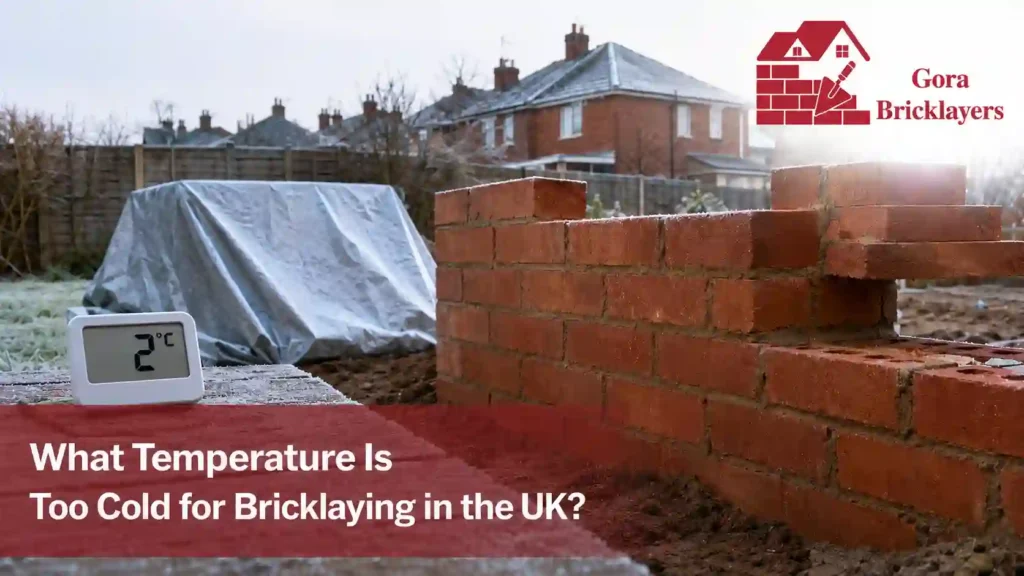
A mild morning can become a damaging frost before fresh mortar gains strength. So, what temperature is too cold for bricklaying in the UK? Work should normally stop below 3°C when temperatures are falling. Different rules apply as air warms after frost. Gora Bricklayers monitors forecasts, materials and masonry across winter projects. Property owners can consult experienced bricklayers serving Birmingham before fixing a weather-sensitive program.
At what temperature should bricklaying stop in the UK?
Brickwork and blockwork should not normally proceed when air temperature falls below 3°C and continues falling. Work should also stay paused below 1°C while temperatures rise. Never use frozen units, frozen mortar, or frozen supporting surfaces.
The mortar itself should remain at least 4°C until it has hardened enough to resist frost. In colder conditions, you may need a properly heated enclosure to achieve that. Ordinary covers alone do not make sub-zero bricklaying safe.
Many contractors use 5°C as a cautious planning threshold. That provides more room for forecast error, shaded walls and cold materials. Product instructions or project specifications can set stricter limits.
Why do rising and falling temperatures change the rule?
A thermometer reading gives only one moment. At 3°C and falling, bricks and mortar may approach freezing soon after laying. At 1°C and rising, conditions may improve through the working period.
Temperature direction therefore changes exposure during early hardening. A wall laid during a cooling afternoon faces greater overnight risk than one laid after a warming dawn.
On managed Birmingham new-build brickwork service projects, Gora Bricklayers checks the forecast beyond working hours. The lowest predicted temperature matters as much as the starting reading.
Cold-weather bricklaying temperature guide
This table summarises practical decisions for cement-based masonry. A contract specification, mortar producer or warranty provider may require different action.
These limits concern more than worker comfort. They protect mortar hydration, bond and dimensional stability. Wind, shade and cold materials can make local conditions worse than an air reading suggests.
Why does frost damage fresh brickwork?
Cement mortar gains strength through hydration, a chemical reaction between cement and water. Low temperature slows that reaction. Fresh mortar stays vulnerable for longer because it develops frost resistance more slowly.
Water expands when it freezes. Ice formation can disrupt the developing cement structure and weaken contact with brick faces. Later thawing cannot reliably restore the lost bond or intended strength.
The risk is highest before initial hardening. Gora Bricklayers treats frost exposure as a quality issue, not a cosmetic inconvenience. Crumbling joints may appear later even when a new wall initially looks sound.
What temperatures should bricklayers check before starting?
Measure air temperature in shade, away from direct heat and sunlight. Record the direction of change. Repeat checks because one early reading cannot represent a full winter day.
Brick, block and substrate temperatures also matter. Stored masonry can remain frozen after air begins warming. A shaded wall or foundation may lag several hours behind nearby sunny areas.
Review hourly forecasts, overnight lows, wind, rain, sleet and frost warnings. The first hardening period extends beyond site hours. A 6°C afternoon offers little comfort when midnight brings minus 2°C.
Planning winter brickwork in Birmingham and concerned about a cold snap? Call 07574 580332 or 07577 478379 to discuss a weather-safe programme. The team can assess timing, materials and protection before fresh mortar faces frost.
How should bricks, blocks, sand and mortar be stored in winter?
Bricks and blocks
Keep units raised from wet ground and covered from rain, snow and frost. Covers should shed water while allowing sensible ventilation. Do not lay units if they carry ice or visible frost.
Sand and cement
Protect sand from saturation, snow and frozen lumps. Store bagged cement in a dry, enclosed place. Frozen aggregate can remain cold even after warm mixing water enters a batch.
Factory-produced mortar
Follow the supplier’s storage, working-time, and winter-use instructions. Keep tubs or silos protected as directed. Do not assume every ready-mixed mortar carries the same low-temperature approval.
Tools and supporting surfaces
Remove ice from mixers, boards, foundations and existing masonry without contaminating them. Never lay onto frozen supports. Tools should not introduce snow, de-icing salt or dirty water into mortar.

Do brick type and moisture change the frost risk?
Saturated bricks bring more water into a wall and become vulnerable when it freezes. Ice can damage some units before mortar strength becomes the main concern. Keep stock dry rather than trying to thaw soaked packs on laying day.
Highly absorbent bricks can quickly pull water from mortar, even in cold weather. Dense engineering bricks behave differently and retain more moisture at the joint. The brickmaker’s laying guidance should control handling.
Concrete blocks may hold significant moisture after rain. Their larger surface area also cools mortar beds quickly. Frozen or snow-covered blocks must remain out of work until fully thawed.
Reclaimed bricks require particular care because condition and absorption vary. Old frost damage may already exist. A trial check can prevent weak units entering exposed winter masonry.
How can fresh brickwork be protected from frost?
Protect wall tops first because open cavities and fresh joints admit water. Use insulated covers supported clear of masonry faces. Secure them against wind without smearing or marking new work.
Waterproof sheeting can sit above insulation but still needs ventilation. Sealed plastic touching masonry may trap condensation. Wet surfaces become more vulnerable when temperatures fall.
Extend protection beyond the final course and down both faces. Keep it in place through the specified hardening period. Severe or prolonged frost may require a heated enclosure rather than blankets.
How long should winter brickwork stay protected?
No single covering period suits every mortar and forecast. Low temperatures extend that vulnerable period.
At least the first night usually needs close attention during marginal conditions. Repeated freezing nights may require protection for several days. Follow the mortar supplier, warranty manual, and contract specification.
Do not remove covers simply because air warms at midday. Masonry can remain cold in shade, and wind can strip heat quickly. Check joints and material temperature before exposing work.
Also inspect protection after strong wind or rain. A displaced sheet offers little benefit. Wet insulation can conduct heat away and become ineffective during the next freeze.
Can heaters or warm water make cold-weather bricklaying safe?
Warm mixing water can raise initial mortar temperature within supplier limits. It cannot thaw frozen sand safely or keep an exposed wall warm overnight. Cement should not be directly heated.
Temporary enclosures can create a controlled working environment. Heating must maintain a safe, even temperature around materials and masonry. The system also needs ventilation and fire controls.
Direct flames or powerful heaters aimed at one wall face create uneven drying. Combustion heaters may add moisture and fumes. A competent cold-weather plan should specify equipment, monitoring, and protection duration.
Can antifreeze be added to bricklaying mortar?
Do not add automotive antifreeze, salt or improvised chemicals to mortar. They can damage hydration, corrode embedded metal and cause staining. They also make final performance unpredictable.
Only use an admixture approved for the selected mortar and masonry. Follow its exact dosage and temperature range. A winter admixture does not permit work on frozen units or substrates.
Accelerators may shorten setting time under permitted conditions. They do not remove the need for protection. Manufacturer instructions and the project specification take priority over site habits.
Does lime mortar have a higher temperature limit?
Lime work generally needs warmer, more stable conditions than ordinary cement-based mortar. Many conservation specifications use 5°C and rising as a minimum. They also require frost protection during extended curing.
Natural hydraulic lime, lime putty and hot-mixed mortar behave differently. Product grade, exposure and wall moisture affect safe working periods. A single temperature cannot cover every lime system.
Specialist lime repointing for period buildings should use compatible materials and a realistic curing window. Enclosed scaffolds can extend seasons, but control must continue after application.
Can pointing and small brick repairs continue in cold weather?
Small repairs are not exempt from temperature limits. Thin pointing joints contain little thermal mass and cool rapidly. Existing masonry can draw heat from fresh repair mortar.
Repointing also needs clean, frost-free and correctly dampened joints. Water used for preparation can freeze inside masonry. That creates a poor bond before new mortar is even inserted.
Emergency weatherproofing may use a temporary non-mortar measure until conditions improve. The permanent repair should wait for a compliant temperature window. Structural cracks or loose bricks still need prompt safety assessment.
Patch repairs can look firm on the surface while remaining weak behind. Protect the full repaired area, not only visible joint faces. Follow specialist guidance for lime and heritage work.
How do rain, snow and wind change cold-weather decisions?
Rain can saturate bricks, wash fresh joints and soak insulation. Falling temperatures then convert that extra moisture into a frost hazard. Weatherproof covers should shed water beyond wall faces.
Do not brush snow into cavities or mortar beds. Clear it from access areas and materials without salt contamination. Frozen snowmelt on scaffolds also creates a serious slip risk.
Wind increases cooling and can dislodge covers. Exposed corners, parapets and chimneys lose heat faster than sheltered wall panels. Secure protection while maintaining ventilation.
Cold weather planning therefore needs a complete forecast, not a temperature icon. Rainfall timing, wind speed and humidity all change protection performance and site safety.
What are the signs that fresh mortar has frozen?
Powdering or crumbling joints
Damaged mortar may scrape out easily after thawing. The surface can look dusty instead of dense and cohesive. Weakness may extend deeper than the visible face.
Cracks or loss of bond
Fine cracks can form through joints or along brick edges. Mortar may separate from masonry units. Tapping and careful probing can reveal hollow or poorly bonded areas.
Unusual surface texture
Frozen joints can develop scaling, pitting, or an open texture. Colour may become patchy. Appearance alone cannot confirm structural quality.
Movement in new courses
Slow hardening allows courses to settle or shift in the wind. Bed joints may compress unevenly. A wall can lose line, level or plumb before mortar becomes firm.
What should happen after mortar freezes overnight?
Stop loading or building above suspected work. Keep people away from unstable freestanding sections. Photograph conditions and record site temperatures before disturbing evidence.
A competent bricklayer should assess joint hardness, bond, alignment and exposure timing. Structural masonry may require laboratory or specialist advice. Surface pointing cannot repair a failed bed joint.
Work that froze before hardening may need dismantling and rebuilding. Property owners can assess frost-damaged brickwork before later finishes hide weak areas. Delayed action risks embedding a defect deeper into the build.
How should a winter bricklaying day be planned?
Before work
Review hourly and overnight forecasts. Check shaded air temperature, unit condition and supporting surfaces. Confirm covers, insulation and fixings are ready before mixing.
During laying
Record temperature changes and shorten batches to match working time. Keep materials dry and off frozen ground. Stop early enough to protect work before temperatures fall.
At the end of the shift
Tool joints at the correct stage and clear wall tops. Fit dry insulation and weatherproof covers securely. Check that wind cannot lift protection overnight.
The following morning
Inspect protection before removal and review the overnight minimum. Check mortar condition and wall alignment. Do not restart until the temperature trend and materials meet requirements.
What UK industry guidance says about cold-weather masonry
Current NHBC guidance stops brickwork below 3°C and falling or below 1°C and rising. It also requires mortar to remain at least 4°C until hardened. Frozen units and frozen surfaces remain unacceptable.
MPA Mortar guidance gives the same central message. Masonry should stop below 3°C unless a controlled enclosure maintains suitable mortar temperature through hardening.
Warranty manuals, specifications and product data can impose higher thresholds. Site teams should record decisions rather than relying on memory. A documented weather plan protects both masonry and contractual compliance.
Choosing a safe temperature window for UK bricklaying
Below 3°C and falling is normally too cold for exposed bricklaying. Below 1°C and rising also remains unsuitable. Mortar needs protection above its critical temperature until it develops enough strength.
Air readings, forecasts, frozen materials and mortar type all affect the decision. Gora Bricklayers can plan Birmingham work around these risks. The related guide to brickwork drying and curing times explains what happens after laying.
For a winter program based on actual site conditions, call Gora Bricklayers on 07574 580332 or 07577 478379. Clients can arrange a cold-weather brickwork assessment before committing labour and materials to a risky forecast.
Frequently Asked Questions
Can bricklayers work at 3°C in the UK when temperatures are still falling?
Bricklaying should normally stop once air temperature falls below 3°C and continues falling. At exactly 3°C, the forecast, material temperature and overnight low still matter. Frozen units or supports cannot be used, and fresh work needs protection while mortar hardens safely on site.
Can bricklaying restart at 1°C after an overnight frost when the day is warming?
Work should remain paused below 1°C even when air temperature is rising. At or above that point, confirm continued warming, thawed bricks, a frost-free substrate and compliant mortar temperature. A sunny air reading does not prove shaded masonry has thawed enough for safe site work.
Will covering fresh brickwork with plastic stop mortar from freezing overnight?
Plastic alone keeps rain off but offers little insulation against frost. Use dry insulated covers supported clear of masonry, with weatherproof sheeting above where needed. Severe cold may require a heated enclosure that maintains mortar temperature until it hardens under control.
Can I use antifreeze or salt in mortar to keep laying bricks during cold weather?
No. Automotive antifreeze, salt and improvised chemicals can weaken mortar, corrode metal and stain masonry. Use only a specified proprietary admixture at its stated dose. Approved additives still do not permit laying frozen bricks or building on frozen surfaces during cold winter work.
Is 5°C a safer minimum temperature for lime mortar and historic brick repointing?
Yes, 5°C and rising is a common minimum for lime mortar work, followed by extended frost protection. NHL, lime putty and hot-mixed systems cure differently, so product and conservation specifications control. Stable temperatures matter throughout application day and the following night.
How can I tell if bricklaying mortar froze before it had properly hardened?
Possible signs include powdering joints, cracks, poor bond, pitting and courses moving out of line. Damage can extend behind a firm-looking surface, so appearance alone is not proof. Stop further loading and have suspect Birmingham brickwork professionally assessed before continuing safely.


