
Homeowners across Birmingham and the wider West Midlands often notice fretting mortar after wet winters, then find water has already entered the wall. Gora Bricklayers inspects and repairs residential brickwork across the region and sees the same early warnings on terraced, semi-detached and new-build stock.
UK weather drives most of the damage. Rain saturates soft joints. Freeze-thaw cycles push water expansion into brick faces. Hard cement pointing on older soft bricks can trap moisture and speed spalling. Catching problems early keeps repairs smaller and safer.
Why Brickwork Problems Escalate in the West Midlands
Brick is durable, yet mortar is designed to weather first. Joints take the seasonal abuse so units last longer. When joints open, water tracks into the wall core, freeze expands the path, and cracks widen.
Local housing stock ranges from Victorian and Edwardian brick to post-war cavity walls and modern facing brick. Each type needs the right mortar and repair method. A quick sand-and-cement smear over lime joints can lock moisture in and harm soft bricks. That is why diagnosis matters as much as the repair itself.
Routine visual checks after storms and hard frosts are enough for most households. The signs below show when a professional bricklayer should assess the work.
Cracks in Bricks or Mortar Lines
Cracks are the most common reason households seek brickwork help. Hairline mortar cracks can be early weathering. Wider joints, stepped patterns, or cracks through the brick units need closer attention.
Stair-step cracks that follow mortar joints often relate to movement or settlement. Horizontal cracks can signal different stress patterns, including wall-tie issues on cavity walls in some cases. Vertical cracks beside openings may sit at weak points around frames. Document cracks with dated photos. Spreading width is more important than length alone.
For a deeper local guide to crack types and causes, read why brick walls crack in Birmingham homes. Structural movement should not be dismissed as “old house character” without assessment.
Crumbling or Missing Mortar Joints
Mortar that turns sandy, recesses deeply, or falls out leaves brick edges exposed. Water then sits on the units and freezes. Birds and plants can open joints further.
Failed pointing is one of the most frequent repair jobs in Birmingham and surrounding towns. Sound repointing restores the joint profile, sheds water and protects the brick face. The mix must suit the wall age and brick hardness.
Households seeing open joints on elevations, gables or garden walls should arrange professional brick repointing across Birmingham properties before winter rain drives more moisture into the wall.
Spalling and Face Damage on Bricks
Spalling is the face of the brick flaking, peeling or blowing off. Soft, powdery faces and piles of grit below a wall are classic signs. Moisture inside the unit freezes, expands and pushes the face away.
Causes include prolonged wetness, impermeable coatings, hard mortar on soft brick, and long-term salt damage. Once the face is gone, the more porous core soaks water faster. Isolated damaged bricks can often be cut out and replaced with matched units. Widespread spalling needs a planned repair, not paint or sealant as a fix.
Period and listed properties often need lime mortar repointing for period and listed homes so the wall can breathe. Wrong mortar choice is a common reason spalling returns after a “quick repoint.”
Loose, Missing or Displaced Bricks
Bricks that rock, sit proud, or leave holes in the face show lost bond. Chimney stacks, parapets and free-standing garden walls are common locations. Missing units invite weather and wildlife.
Loose bricks are a safety issue above paths and drives. Temporary props or cordons may be needed until a bricklayer rebuilds the section with matching bricks and correct bedding. Matching colour, texture and size keeps the elevation looking continuous after repair.
Damp Patches, Internal Stains and Mould Near External Walls
External brick failure often shows inside as damp patches, tide marks, peeling paint or mould on cold external walls. Not every damp problem is brickwork, yet open joints and cracked render pathways are frequent contributors.
Check the outside wall opposite the internal stain. Look for open pointing, cracked sills, failed flashings and bridged damp-proof courses. Fixing only the internal decoration leaves the moisture source active. Coordinated external brick and mortar repair is the lasting approach when masonry is the entry path.
Bulging, Bowing or Leaning Masonry
A wall that bows outward or leans is a structural concern. Bulges can relate to wall-tie corrosion on cavity walls, overloaded garden walls, or long-term movement. Leaning chimneys and garden walls are especially visible after wet seasons.
Do not ignore progressive movements. Temporary DIY packing is not a repair. A professional assessment decides whether local rebuilding, ties, or wider structural advice is required. Safety around public footpaths and neighbouring land matters on boundary walls.
White Salts and Persistent Staining
White powdery deposits, known as efflorescence, form when water moves through masonry and leaves salts on the surface. Light deposits can be temporary after building work. Recurring heavy salts often mean ongoing wetness.
Green algae and dark staining also mark areas that stay damp. Cleaning alone does not solve joint failure. Source control through pointing, flashings and drainage is the durable fix. Persistent staining around chimneys often pairs with failed flaunching or open stack joints.
Chimney Brickwork Breaking Down
Chimneys take wind, rain and temperature swings from all sides. Soft mortar, cracked flaunching, leaning pots and spalled stack bricks are common. Water can track into loft spaces and rooms below.
Gora Bricklayers frequently finds that small joint repairs delayed for years become full stack rebuilds. An early specialist chimney repointing for Birmingham rooftops protects the stack, pots and rooms beneath. Access and scaffolding need planning for safe work at height.
Garden and Boundary Walls Showing the Same Warnings
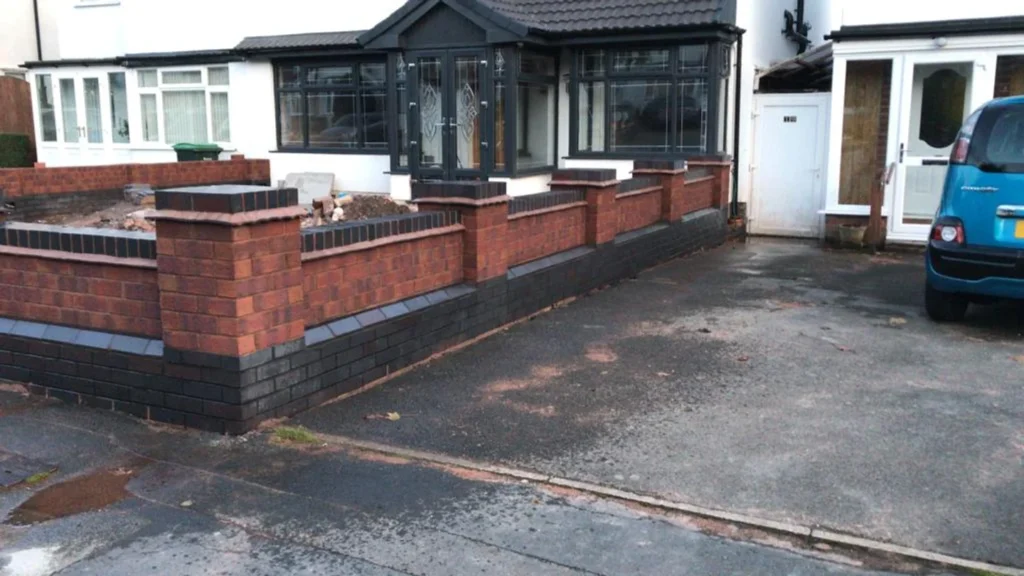
Garden walls share the same failure modes: open joints, lean, frost damage and loose copings. They also take soil pressure on one side when used as low retaining structures. Cracked copings shed water into the core of the wall.
Failed boundary walls create neighbour and safety issues. Rebuilds need correct foundations, movement joints where required, and suitable bricks. Treating a leaning garden wall as “only decorative” underestimates risk if it borders a pavement or drive.
Cosmetic Signs Versus Structural Red Flags
| Sign | Often manageable as planned repair | Escalate sooner |
|---|---|---|
| Hairline mortar weathering | Yes, schedule repointing | If joints open and deepen quickly |
| Local fretting pointing | Yes | If water enters and damp appears inside |
| Isolated spalled bricks | Cut out and replace | Spreading faces across large areas |
| Stair-step cracks | Needs assessment | If widening, or doors and floors also move |
| Loose single brick | Prompt local repair | Clusters of loose units or units over pathways |
| Wall lean or bulge | Professional structural view | Progressive movement, near structures or public areas |
| Recurring chimney damp | Stack and flashing survey | Active leaks into loft or rooms |
Gora Bricklayers uses site visits to separate cosmetic weathering from movement that needs a wider plan. Written quotes follow inspection, not guesswork from photos alone.
Open joints and frost-damaged faces do not improve with another wet Midlands winter. Call 07574 580332 or request a free brickwork quote online for a clear inspection and honest scope before small defects become large rebuilds.
What Happens If Brickwork Damage Is Ignored
Water entry accelerates every season. Mortar loss becomes brick loss. Brick loss becomes hollow pockets that hold more water. Damp can damage plaster, timber and insulation. Chimney neglect can lead to unstable stacks. Garden wall neglect can end in partial collapse.
Authoritative UK guidance stresses regular maintenance of brick buildings and appropriate materials for repair. Households wanting technical background can read Historic England advice on maintaining brick buildings for material and care principles, then book a local bricklayer for the actual survey and works.
Early repointing and unit replacement almost always cost less than delayed structural rebuilds.
Conclusion
Top Signs Your Home Needs Brickwork Repairs include cracks, fretting mortar, spalling faces, loose bricks, damp linked to external walls, lean or bulge, recurring salts, failing chimneys and damaged garden walls. West Midlands weather rewards early action and correct mortar choice.
Gora Bricklayers delivers insured brickwork repairs, repointing and rebuilds across Birmingham and the West Midlands with free quotes after site assessment. For stack-specific warnings, continue with signs a chimney needs repointing or repair before arranging a joint survey of the roof and elevations.
Ready for a professional view of cracked or fretting brickwork? Call Gora Bricklayers on 07574 580332 or request a free brickwork quote online and get a clear plan for repair rather than a temporary cover-up.
Frequently Asked Questions
1. What are the most common top signs your home needs brickwork repairs in the UK?
The most common signs are crumbling or recessed mortar, cracks through joints or bricks, spalling faces, loose or missing units, damp patches on internal faces of external walls, and chimneys with open joints or damaged flaunching. Garden walls often show lean, failed copings and fretting joints as well. In the West Midlands, wet winters and freeze-thaw cycles speed these defects once water enters open joints. Hairline weathering can wait for a planned repoint, but spreading cracks, bulging walls and active leaks need prompt assessment. Dated photos help show whether a crack is stable or growing. A bricklayer can separate cosmetic joint failure from movement that needs a wider structural view. Early repair keeps water out and protects brick units that would otherwise spall.
2. Is crumbling mortar always a job for full wall rebuild?
No. Crumbling mortar is usually addressed by raking out failed joints and repointing with a compatible mix. Full rebuild is more likely when large areas of brick are loose, the wall is leaning or bulging, or units are so damaged that bond cannot be restored safely. On older soft brick, using an overly hard cement mix can cause more spalling later, so mortar specification matters. Chimney stacks sometimes need rebuild of the upper courses if the core is badly weathered. Garden walls with failed foundations may need rebuild rather than pointing alone. A site inspection decides the scope after checking access, height and condition. Written quotes should state whether the work is pointing, unit replacement, or reconstruction.
3. How can homeowners tell cosmetic brick cracks from serious structural movement?
Cosmetic weathering cracks are often fine, stable and limited to mortar faces. More serious movement can show as stair-step cracks that widen, cracks through multiple brick courses, distortion of openings, sticking doors, or cracks that return after filling. Horizontal cracks and bulging panels need professional assessment. Context matters: a single fine crack on a century-old terrace is different from a new stepped crack after nearby excavation or a long dry spell followed by heavy rain. Monitoring with dated photos over weeks can show change. If cracks grow, or if they sit with damp and distorted floors, seek advice sooner. Bricklayers and, where needed, structural engineers work together on complex movement cases. Do not rely on flexible fillers as a permanent structural fix.
4. Why does spalling brick happen so often after wet and cold seasons?
Spalling happens when moisture inside the brick freezes and expands, or when salts and trapped water break the face. Soft bricks, hard impermeable pointing, failed flashings and constant driving rain all raise risk. Once the face is gone, the inner body absorbs water more easily and damage spreads. UK winters with repeated freeze-thaw swings are hard on saturated masonry. Paint and waterproof coatings that stop the wall breathing can make matters worse on traditional solid walls. Repair usually means cutting out damaged units, matching replacements, and repointing with a suitable mortar. Ignoring spalling leaves hollows that hold water and debris. Prevention is mostly about keeping joints sound and water shedding correctly from roofs, sills and copings.
5. When should a Birmingham homeowner call a bricklayer rather than wait?
Call sooner when joints are open enough to take a finger tip, bricks are loose above paths, damp is appearing inside opposite external walls, chimneys are shedding mortar or leaning, or any bulge or progressive crack is visible. Waiting through another wet winter usually increases the repair area. Safety issues such as units above public footpaths need urgent attention. Planned maintenance windows in drier months are ideal for large repointing jobs, yet emergency making-safe can be arranged when stacks or walls are unstable. A free quote visit lets a local team measure access, scaffolding needs and materials. Photos help for an initial view, but on-site assessment is more reliable. Clear scopes prevent underquoting and incomplete repairs.
6. Can the same brickwork warning signs appear on extensions and new builds as on older houses?
Yes. New builds and extensions can show open joints from poor workmanship, movement at junctions with the old house, mismatched mortar, and water staining where flashings or trays fail. Older houses more often show long-term fretting, lime joint failure and spalling from hard cement repairs. Junctions between old and new brickwork are common weak points if movement joints and bonding are wrong. Matching brick type and joint style at extensions is important for both weather performance and appearance. Whether the property is Victorian or recently built, water entry and movement still drive most visible signs. Early inspection at the junction of an extension and the main house can prevent long diagonal cracks. Professional matching and repair keep the elevation consistent.


