
Block Paving vs Concrete Driveways: Which Is Better? depends on budget, how the household handles maintenance, and whether easy unit repair matters more than a seamless slab. Homeowners in Birmingham and the wider West Midlands face clay ground, heavy rain and freeze-thaw swings that test any surface. Gora Bricklayers builds and repairs outdoor hard landscaping where driveway landscaping and garden wall brickwork across the West Midlands must sit on a sound base, not only a smart finish.
There is no single winner for every plot. Block paving usually wins on design flexibility and repairability. Concrete often wins on lower first cost and fewer weeds between joints. The sections below set out a clear comparison so the choice matches the property, not only the brochure photo.
What Each Driveway Surface Actually Is
Block paving uses individual concrete or clay blocks laid on a compacted sub-base and bedding layer, with jointing sand and edge restraints. Patterns such as herringbone and stretcher bond change both look and interlock under vehicle loads.
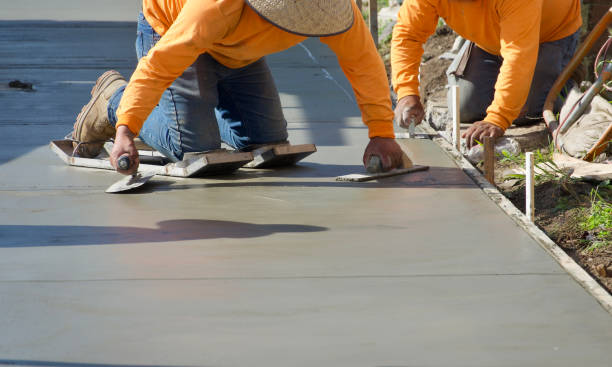
Concrete driveways are poured as a slab, sometimes brushed plain, sometimes pattern-imprinted to mimic stone or blocks. The surface is continuous. Movement shows as cracks rather than joint shifts.
Both systems need proper excavation, sub-base depth, falls for water, and edge support. A poor base ruins block paving and concrete alike. Material choice cannot rescue weak groundwork.
Cost Comparison for UK Driveways
National 2026 trade cost guides often place plain concrete roughly in the mid tens to around £100 per square metre installed, and block paving often higher, commonly into the £70 to £130+ per square metre band depending on block quality and design. Premium blocks, complex patterns and poor access push block paving further up. Imprinted concrete sits above plain concrete once colour and pattern work are included.
On a typical two-car driveway of about 40 to 60 square metres, concrete often looks cheaper on day one. Block paving can cost more at install, then save money when only a few units need lifting later. Demolition of old surfaces, drainage, edging and gates can outweigh the surface material difference.
Local labour and clay excavation in the West Midlands vary by street. For broader labour context on brick and outdoor work, see cost factors when hiring bricklayers in Birmingham. Always treat online ranges as directional and get a measured quote.
Durability and How Each Surface Fails
Well-built block paving can last decades if the sub-base stays stable and edges hold. Failure modes include settlement, rutting in soft spots, edge spread, and staining. Individual blocks handle small movement better than a continuous slab because joints allow slight flex.
Concrete slabs can last a long time with correct thickness, reinforcement where specified, and control joints. UK freeze-thaw and clay movement still produce cracks. Once a slab cracks, the line usually remains visible even after filling. Imprinted concrete can also fade or wear at the colour layer over years of traffic and cleaning.
Heavy vehicles, oil drips and tree roots stress both systems. Root barriers, thicker construction and good falls matter more than the brand name on the block.
Maintenance: Weeds, Sealing and Everyday Care
Block paving needs joint sand topped up over time. Weeds can appear in joints if sand washes out or organic matter builds up. Periodic sweeping, occasional re-sanding and careful use of weed control keep the surface tidy. Some households seal block paving; sealing is optional and product-dependent, not a substitute for a sound base.
Concrete needs less joint weeding because there are no sand joints. Stains, moss on north-facing shaded slabs, and crack monitoring are the main tasks. Imprinted surfaces may need resealing to keep colour and sheen. Snow and ice treatments should follow product guidance so surfaces are not etched unnecessarily.
Households that want minimal joint care often prefer concrete. Households happy to re-sand joints every few years often prefer blocks for looks and repair flexibility.
Repairs When Something Goes Wrong
This is where block paving often wins. Damaged or stained blocks can be lifted, the bedding corrected, and new units dropped in. Utility companies can open a section and reinstate with matching blocks more cleanly than patching a slab.
Concrete repairs are harder to hide. Crack injection and patch repairs rarely match the original finish, especially on imprinted patterns. Large failed areas may need full panel replacement. That long-term repair cost is why many trade answers favour blocks when kerb appeal and future works matter.
Gora Bricklayers sees both surfaces after poor installs: blocks on thin sub-base that sink, and concrete poured without proper joints that spider-crack within a few winters. Repair strategy should be part of the original decision, not an afterthought.
Drainage, Planning and Front Gardens
Front gardens in England often need care under permitted development rules when hard surfacing is added or replaced. Permeable systems or drainage that does not run onto the highway can avoid full planning permission in many cases. Rules depend on area and design.
Block paving can be detailed as more permeable when open joints and suitable sub-base allow water to soak away, subject to correct specification. Dense concrete is less permeable unless designed with channels, soakaways or permeable concrete systems. Households should not assume either surface is automatically planning-compliant.
Official UK government guidance on permeable front garden surfacing explains the principles. Local authority advice still applies for the specific plot. Surface water that floods a neighbour or the pavement creates problems regardless of material.
Appearance and Kerb Appeal
Block paving offers colour blends, borders, curves and patterns that many buyers associate with higher-value homes. Herringbone fields with contrasting soldier courses are common on West Midlands semi-detached streets. Clay blocks give a warmer traditional look than grey concrete blocks.
Plain concrete is clean and functional. Imprinted concrete aims for block or stone character in a single pour, with less joint line. Some households prefer the seamless look; others find imprint patterns less convincing up close than real blocks.
For outdoor spaces that mix driveways with seating or paths, stone patio and paving work with proper base preparation can complement either driveway type when levels and drainage are coordinated.
Side-by-Side Comparison Table
| Factor | Block paving | Concrete (plain or imprinted) |
|---|---|---|
| Typical first cost | Often higher | Often lower for plain slab |
| Kerb appeal / design range | High | Medium (high if imprinted) |
| Weed risk in joints | Higher if sand fails | Low |
| Crack visibility | Local settlement more common than long cracks | Cracks often permanent and visible |
| Repairability | Excellent unit-level repair | Harder to hide patches |
| Drainage options | Can be detailed for permeability | Needs channels or special systems |
| Best for | Design-led drives, future access for utilities | Budget-led, low joint maintenance |
| Weakest when | Thin base, weak edges, neglected joints | Poor joints, clay movement, imprint fade |
Neither column replaces a site survey. Clay depth falls toward the house, and tree roots can flip the recommendation.
A neat surface on a weak sub-base fails in a few Midlands winters. Call 07574 580332 or request a free driveway and brickwork quote for a measured view of block paving or concrete on the actual plot, including drainage and edging.
Which Option Suits Different Priorities
Choose block paving when design, colour and future repair access rank high, and the household accepts joint care. Choose concrete when lowest practical first cost and minimal joint weeding matter most, and visible crack risk is acceptable. Choose imprinted concrete when a patterned look is wanted without individual blocks, knowing repairs may show. Choose neither until the sub-base depth, edge restraints, falls and planning position are clear.
Gora Bricklayers recommends matching the surface to how the drive is used: daily parking, occasional vans, steep slopes and shared access all change the specification. A van-turning bay may need stronger edge details than a short straight run.
Related Outdoor Work Around the Drive
Driveways rarely sit alone. Boundary walls, steps, planters and porch bases affect levels and water paths. Material choices should align so water does not pond against house brickwork.
For walls that frame the frontage, brick versus block choices for garden and boundary walls affect cost and finish beside a new drive. Coordinated design avoids a smart driveway next to a failing fretting wall.
Conclusion
Block Paving vs Concrete Driveways: Which Is Better? has a practical answer: block paving for repairability and design; concrete for lower entry cost and fewer sand joints. West Midlands clay and weather punish weak bases under both. The better surface is the one specified for load, drainage and maintenance habits on that plot.
Gora Bricklayers delivers outdoor hard landscaping and brickwork across Birmingham and the West Midlands with free quotes after site measurement. For longevity thinking on mortar and weather cycles more generally, how long brick repointing lasts in the UK shows why maintenance schedules matter as much as day-one materials.
Ready to decide between block paving and concrete on a real driveway layout? Call Gora Bricklayers on 07574 580332 or request a free driveway and brickwork quote and get a clear recommendation based on ground conditions, not only catalogue samples.
Frequently Asked Questions
1. Is block paving better than concrete for a residential driveway in the UK?
Block paving is often better when kerb appeal and future repairs matter, because individual blocks can be replaced and patterns can be tailored to the house. Concrete is often better when the priority is a lower first cost and less joint weeding. Both can last many years with correct sub-base depth, falls and edge support. Poor installs fail on either material, especially on clay soils common in parts of the West Midlands. Utility reinstatement is usually cleaner on block paving than on a cracked imprint slab. Households should weigh maintenance tolerance as heavily as day-one price. A site survey is more reliable than online averages for the final call.
2. Which is cheaper long term, block paving or a concrete driveway?
Plain concrete is often cheaper to install. Block paving can cost more at the start but may cost less when local repairs are needed, because units can be lifted without replacing a full panel. Over a 20 to 30 year period, crack repairs, resealing of imprinted surfaces, re-sanding of block joints and any full replacement all affect the total. National cost bands for 2026 commonly show concrete lower per square metre at install and block paving higher, with wide spreads by product and access. Demolition and drainage can exceed the surface cost difference. Written itemised quotes make lifetime comparisons honest. Avoid bids that skip sub-base depth and edge restraints.
3. Does block paving always get weeds while concrete does not?
Block paving has sand joints where weeds can establish if sand washes out or organic debris builds up. Concrete has no sand joints, so classic joint weeds are rare, though moss and algae can still grow on damp shaded slabs. Good jointing sand, edge restraints and occasional maintenance reduce weed pressure on blocks. Sealing is not a complete weed cure if the base stays wet and sand is thin. Concrete that cracks can hold dirt in the crack line and look untidy. Maintenance habits matter as much as material choice. Households who dislike any joint care often lean toward concrete for that reason alone.
4. How do drainage and front garden rules affect the choice?
England has rules for hard surfacing at the front of houses that encourage permeable design or controlled drainage so water does not run onto the highway. Block paving can be specified with permeable jointing and sub-base details in many designs. Concrete usually needs falls to gullies, channels or soakaways unless a permeable concrete system is used. Planning position depends on the property and the exact proposal, so local authority advice may still be needed. Official government guidance on permeable front gardens is a useful starting point. A driveway that floods the house path or neighbour is a failure regardless of block or slab. Design drainage first, then pick the surface finish.
5. Can a cracked concrete driveway be replaced with block paving later?
Yes. Many households remove failed concrete and rebuild in block paving once the ground is excavated and a proper sub-base is installed. The old slab must be broken out and disposed of, which adds cost and time. Levels at the garage threshold, public footpath and house damp-proof course must be checked so the new surface does not trap water against brickwork. Matching edging and walls at the same time improves the finish. Switching materials is a chance to fix falls that were wrong on the original pour. Photos of problem ponding help the survey. A full rebuild is usually better than laying blocks over a cracked slab without proper construction.
6. What should West Midlands homeowners ask before choosing block paving or concrete?
Ask about sub-base depth for vehicle loads, edge restraint type, design falls, drainage strategy, and how repairs will look in five years. For block paving, ask about block grade, pattern, jointing sand and whether herringbone is recommended for parking areas. For concrete, ask about thickness, reinforcement or fibres if proposed, control joints, and imprint or colour warranties if used. Request itemised costs for excavation, disposal, base, surface and edging. Confirm who handles skips, permits for skips on the highway, and reinstatement at the boundary. A free site visit should produce a written scope, not only a verbal square-metre rate. Clear answers separate durable installs from thin finishes on weak ground.


