

Families across the vibrant neighbourhood of Saltley cherish the historic charm of their Victorian and Edwardian terraced homes. However, as families grow and lifestyle needs change, the desire for extra living space becomes a priority. While extending into a compact rear yard or creating a side return extension seems like the perfect solution, the process is rarely as simple as laying a few bricks.
Once extension plans commence, many homeowners suddenly discover hidden structural challenges. These issues stem from the tight urban layout, historic building methods, and unique soil conditions common throughout this area of Birmingham.
Fortunately, navigating these challenges doesn’t have to be a nightmare. Gora Bricklayers stands ready with the premier bricklayer service Saltley Birmingham UK, offering the gentle guidance, technical expertise, and skilled hands required to turn potential structural worries into a flawless, successful home improvement project.
The Architectural Heritage of Saltley Terraces
To understand the complexities of extending a Saltley home, we must first look at how these properties were originally built. Lining bustling streets such as Washwood Heath Road, Alum Rock Road, and the surrounding avenues, these houses boast solid brick walls constructed over a century ago.
Solid Walls vs. Modern Cavity Construction
Unlike modern homes built with two layers of brick separated by an insulated cavity, traditional Victorian terraces were built using solid 9-inch brickwork. When you attach a brand-new cavity wall extension to an antique solid wall, you are asking two fundamentally different types of construction to behave as one.
Shallow Historic Foundations
A century ago, builders did not use the deep, concrete trench-fill foundations required by today’s building standards. Instead, Saltley terraces often rest on incredibly shallow brick footings. When you dig deep foundations for a new extension right next to the shallow foundations of the original house, you risk undermining the historic structure if not managed by an expert bricklayer.
The Hidden Enemy: Local Clay Soil and Seasonal Movement
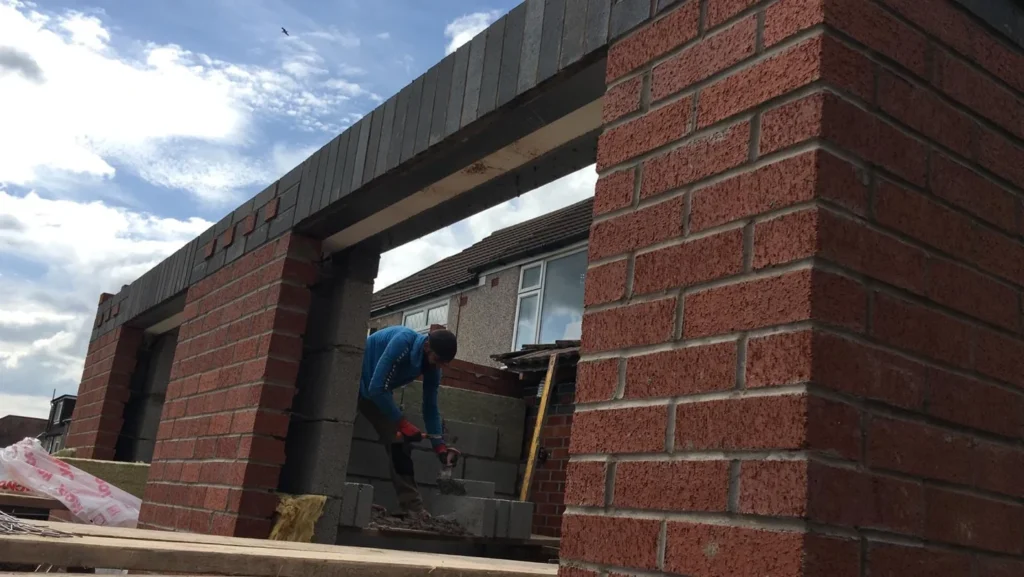
One of the most significant factors affecting extensions in east Birmingham is the ground beneath your feet. The clay soils prevalent beneath Saltley are highly reactive to moisture.
How Clay Soil Affects Your Extension
- Winter Expansion: During the wet winter months, the clay soil absorbs water and swells, pushing upward against foundations (a process known as “heave”).
- Summer Contraction: In drier summer months, the clay shrinks and cracks, causing the ground to drop and the foundations to settle.
- Drainage Alterations: A new extension adds physical weight to the ground and alters how rainwater drains around the property, changing the soil’s moisture balance.
Because the old house has had a hundred years to settle into this clay, and the new extension is heavy and fresh, they will react differently to the soil. Without expert intervention, the result is differential movement. This manifests as stepped, zig-zag cracks following the mortar lines where the original terrace and the fresh construction meet. Over time, internal plaster will develop fine lines that slowly widen, requiring constant cosmetic repairs.
Navigating the Party Wall Act in Dense Urban Streets
Terraced housing means shared boundaries. In the densely packed streets of Saltley, an extension doesn’t just affect your property it affects your neighbours, too.
The Party Wall etc. Act 1996 dictates that you must notify your neighbours if you plan to excavate near their property or do any work on a shared wall. Because space in back gardens is so limited, excavation becomes a highly delicate operation. Heavy machinery can send vibrations through the adjoining properties.
Working along these boundaries demands a highly coordinated approach. A professional bricklayer understands how to sequence the digging, pouring, and building phases to ensure the structural stability of the entire terrace is never compromised.
Frequent Structural Challenges in Terrace Extensions
When inexperienced builders attempt to extend historic terraces, several predictableand costlyfailures tend to occur within the first few years.
1. Thermal Expansion and Contraction
Old, soft Victorian bricks and modern, dense facing bricks expand and contract at different rates when exposed to the sun and freezing temperatures. Without the correct installation of vertical movement joints, these two sections of brickwork will press against one another, ultimately causing the brick faces to shear or pop off.
2. Failing Wall Ties
When tying a new cavity wall to an old solid wall, heavy-duty stainless-steel wall ties must be used. If these are placed at the wrong intervals, or if the mortar fails to grip them properly, the outer skin of the new extension can gradually bow outward over time, destabilising the roof structure above.
3. Bridging the Damp-Proof Course (DPC)
Damp is a notorious issue in older homes. When an extension is added, the new damp-proof course must seamlessly link with the existing one (if the older home even has one). Poor bricklaying often leads to the DPC being breached by dropped mortar inside the cavity. When this breathability gets blocked, rainwater and ground moisture travel through small gaps, showing up as rising damp or penetrating damp on your brand-new interior walls.
4. Incorrect Lintel Placement
Lintels placed above new bi-fold doors or expansive windows bear immense weight. If they are seated at heights that concentrate pressure unevenly on the historic masonry, it can lead to immediate bulging or dangerous separation of the brickwork above the openings.
The Gora Bricklayers Solution: Seamless Integration
Gora Bricklayers brings years of hands-on, specialist experience gained from highly technical projects throughout east Birmingham. They don’t just build walls; they engineer seamless transitions between the 19th and 21st centuries.
Matching the Unmatchable
The team knows the exact behaviour of Saltley terraces. One of the most glaring signs of a poorly planned extension is a jarring clash of brick colours. Gora Bricklayers takes the time to source reclaimed bricks or specialist reproduction stock that perfectly matches the soft red tones, weathered faces, and textured surfaces of the original Victorian stock. They ensure the extension feels like a natural, original part of the house from day one.
Invisible Strength
The process begins with a calm, highly detailed structural survey. The team records any current movement in the property and maps out the best anchor points. Using specialist helical reinforcement bars (stainless steel rods twisted like corkscrews), they stitch the new masonry directly into the historic brickwork. This forms an incredibly strong, invisible link that prevents the two structures from pulling apart.
Movement joints are then strategically positioned, often hidden behind downpipes or architectural features, to absorb the natural seasonal changes of the clay soil without transferring stress to the bricks.
Step-by-Step: The Process of Perfect Brickwork Integration
When you hire a premium bricklayer service Saltley Birmingham UK, the construction phase follows a strict, highly controlled methodology:
- Preparation and Toothing: The team carefully removes small, staggered sections of the existing exterior brickwork. This creates a clean “toothed” bonding face, allowing the new bricks to interlock with the old, rather than just butting up flat against them.
- Engineered Foundations: Trenches are dug well below the local frost line and the expansive clay zone. Steel reinforcement meshes are often added to the concrete for superior load distribution.
- Coursing Alignment: The bricklayers painstakingly raise the new walls course by course, constantly checking their levels against the existing house. The mortar joint thickness is adjusted by millimetres to ensure the horizontal lines flow perfectly from the old house to the new.
- Weatherproofing the Junction: Flexible, highly breathable mortar is used at the immediate junction. Continuous cavity trays and vertical damp proof courses are installed to ensure that water hitting the old solid wall cannot track across into the new cavity wall.
- Traditional Pointing: The final step is the mortar finishing. Gora Bricklayers utilizes traditional pointing styles (such as weather-struck or flush pointing) matching the historical techniques used across Saltley, ensuring the extension weathers evenly over the coming decades.
Meeting Birmingham City Council Regulations with Ease
Navigating local bureaucracy can be as stressful as the build itself. Birmingham City Council expects clear, concise documentation for extensions in densely populated terraced areas.
- Building Regulations Part A (Structure): Ensures the new walls can support the roof and won’t drag the old house down.
- Building Regulations Part C (Moisture): Ensures the property is fully protected against ground and weather moisture.
Gora Bricklayers takes the headache out of compliance. They prepare all necessary method statements and work closely with structural engineers to ensure drawings and calculations are flawless. The team communicates directly with building control officers on-site, supplying complete records for the homeowners. This proactive approach guarantees that your extension gets signed off smoothly, keeping your investment legally protected for generations.
The Real Benefits Families Notice After Completion
The immediate result of a perfectly executed extension is the transformation of daily life. Families suddenly have room to breathe enjoying sunlit, open-plan kitchens, much-needed additional bedrooms, or quiet home offices.
Because Gora Bricklayers focuses so heavily on aesthetic integration, the extension blends flawlessly. Visitors frequently comment on how naturally the new space fits the footprint of the original house. Furthermore, property value increases significantly, as savvy buyers in Saltley’s competitive property market easily recognise the difference between a cheap build and premium, structurally sound craftsmanship.
Best of all, maintenance remains minimal. Because the detailing prevents water entry and the helical ties manage soil movement, families can enjoy peace of mind through harsh Birmingham winters and dry summers, knowing their home is secure.
Take the next step toward your perfect extension. Reach out to Gora Bricklayers now and arrange your no-obligation consultation for expert bricklayer service Saltley Birmingham UK.
Frequently Asked Questions
What creates cracks at the junction during Saltley terrace extensions?
Cracks are primarily caused by differential movement. The combination of historic shallow solid walls meeting new, deep cavity construction, combined with the shifting nature of Saltley’s clay soil, creates immense shear stress along the vertical connection line.
How long does correctly detailed extension brickwork last in Saltley?
When built with proper movement joints, helical ties, correct damp-proofing, and matched materials, a high-quality brick extension will easily last for 50 to 100 years with only basic, routine pointing maintenance.
Does an extension on a Saltley terrace require formal approval?
While many single-storey rear extensions qualify under Permitted Development rights, you still require Building Regulations approval. Larger works, two-storey extensions, or works affecting the boundary will absolutely require formal Planning Permission from Birmingham City Council and adherence to the Party Wall Act.
Can new brickwork actually match original Victorian bricks in Saltley homes?
Yes. Through careful local sourcing, it is possible to find reclaimed Victorian stock. Alternatively, specialist brickmakers produce modern bricks “tumbled” to look aged. Matching the mortar dye and the pointing style is the final secret to a seamless blend.
What keeps damp away once the extension finishes?
A combination of correctly installed continuous damp-proof courses (DPC), cavity trays above windows, weep holes to let the cavity breathe, and the use of breathable mortar at the junction. This system ensures walls remain dry internally while allowing trapped moisture to escape outside.